
Armed conflict has never fully disappeared from human history. Analysts point to ideology as one of many drivers.
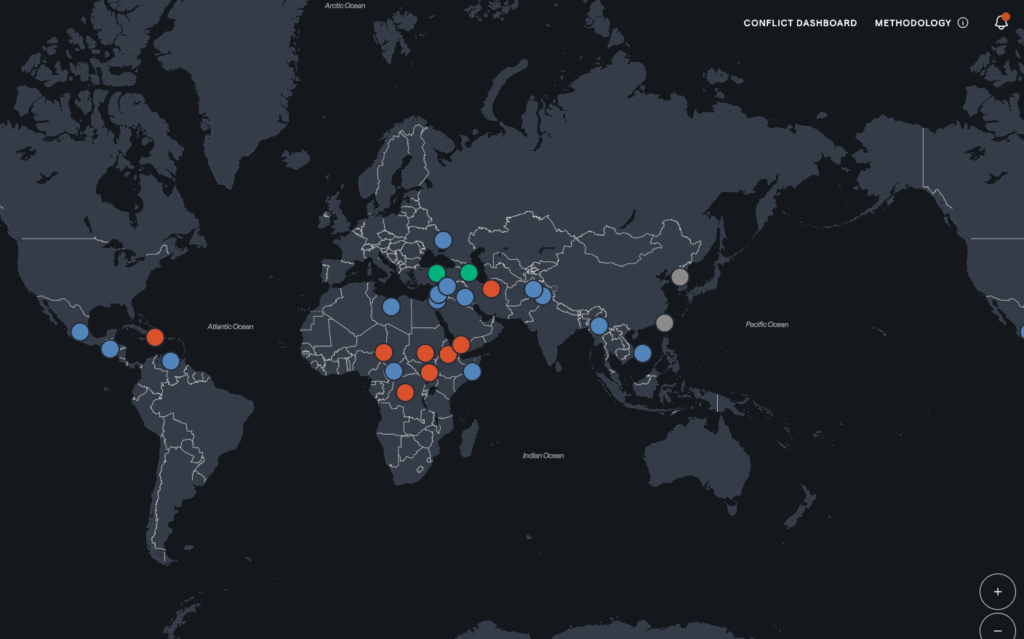
Historians and conflict researchers broadly agree that organized violence has been a near-constant feature of human history, with few, if any, extended periods entirely free of armed conflict somewhere in the world. Today, researchers who track global conflict, including those at institutions such as the Uppsala Conflict Data Program, have reported that the number of active state-based and non-state conflicts remains at or near multi-decade highs, spanning multiple continents simultaneously.
Ideology is frequently cited as a driver of conflict, particularly in cases involving competing political systems, religious doctrines or nationalist movements, where differing visions of how a society should be organized can become difficult to reconcile through negotiation alone. But researchers caution against treating ideology as a stand-alone explanation. Competition over resources such as land, water and energy, disputes over territorial borders left unresolved by past colonial or imperial boundaries, and struggles for political power within fragile states are all identified in academic literature as recurring, often overlapping causes.
Economic inequality and weak governance are also commonly cited factors, with several studies showing that conflicts are more likely to emerge and persist in states where institutions are unable to manage disputes peacefully or distribute resources equitably. In many modern conflicts, ideology functions less as the root cause and more as an organizing framework — a way to mobilize populations, justify violence, or attract external support — layered on top of more material grievances.
Conflict researchers generally describe modern wars as the product of multiple interacting factors rather than any single cause, cautioning that reducing complex, region-specific conflicts to ideology alone risks oversimplifying dynamics that often involve economic, historical and political dimensions in combination.

Diplomats continue to pursue negotiated settlements even as new conflicts emerge elsewhere.
The human toll of sustained conflict extends well beyond battlefield casualties. The United Nations High Commissioner for Refugees has reported that global forced displacement, encompassing refugees, asylum seekers and people displaced within their own countries, has climbed to record levels in recent years, driven by prolonged wars in multiple regions alongside political persecution and instability. Humanitarian agencies have repeatedly warned that funding for displaced populations has failed to keep pace with need, leaving many refugee camps and host communities under severe strain.
Conflict also carries substantial economic costs, both for the countries directly involved and for the broader global economy through disrupted trade, energy markets and supply chains. Independent research groups that track global military expenditure have reported that worldwide defense spending has risen for multiple consecutive years, reaching levels not seen since the Cold War, as governments respond to active conflicts and heightened tensions between major powers. Economists have noted that this spending, while boosting some defense industries, typically diverts public resources away from health, education and infrastructure investment.
Despite the persistence of conflict globally, mediation and peace processes have produced durable results in specific cases, from negotiated settlements that ended long-running civil wars to internationally brokered ceasefires that, while imperfect, have reduced violence in specific regions. Researchers who study peace processes note that successful agreements typically share common features, including sustained international engagement, credible enforcement mechanisms and provisions that address the underlying grievances — whether ideological, economic or territorial — that initially drove the fighting, rather than treating a ceasefire alone as a lasting solution.
Sources: This report draws on published conflict-research data, including work associated with the Uppsala Conflict Data Program, alongside independent analysis by Aurax News.