
|
Getting your Trinity Audio player ready...
|
U.S. and Chinese officials held high-level talks on artificial intelligence and trade Sunday ahead of a planned Trump-Xi summit.
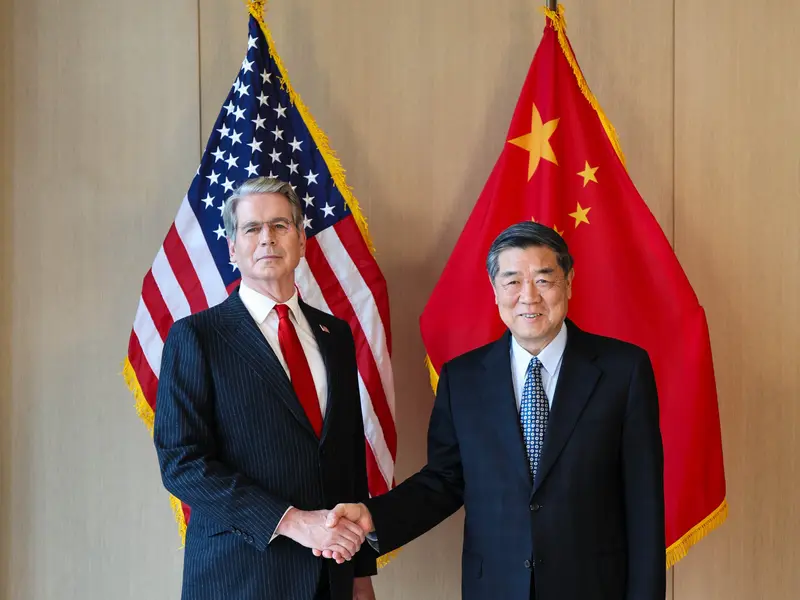
The discussions included AI safety, tariffs and critical minerals as Washington and Beijing sought to manage tensions between the two economies.
U.S. and Chinese officials concluded several hours of economic and trade discussions in New York on Sunday, with artificial intelligence, tariffs and critical minerals among the issues addressed ahead of President Donald Trump’s planned meeting with Chinese President Xi Jinping. Treasury Secretary Scott Bessent met with Chinese Vice Premier He Lifeng, while U.S. Trade Representative Jamieson Greer and China’s chief trade negotiator Li Chenggang also participated.
One of the main developments was a U.S. proposal for a notification mechanism covering artificial intelligence incidents that could raise national security concerns. Bessent said the two countries were discussing an AI dialogue designed to improve communication about serious threats, while U.S. officials emphasized that the proposal was separate from existing restrictions on advanced AI chips and semiconductor manufacturing equipment. Chinese state media described the broader discussions as candid and constructive but did not provide detailed information about the AI proposal.
The talks also advanced plans for a bilateral “Board of Trade” intended to continue negotiations over tariffs and other commercial issues. U.S. officials said the countries were examining whether certain non-sensitive products, including consumer and agricultural goods, energy products and medical devices, could qualify for lower tariffs. The discussions come as a broader U.S.-China trade truce remains scheduled to expire Nov. 10, creating another deadline for negotiators.
Critical minerals remained another important issue in the negotiations. China is a major supplier of rare-earth materials and related products used in industries including automobiles, electronics and advanced technology. Washington has pressed Beijing over supplies of critical minerals, while the two governments continue to negotiate broader trade arrangements following years of tariff disputes and restrictions on strategic technologies.
Artificial intelligence has increasingly become part of the wider U.S.-China economic and national security relationship. Both countries are competing for leadership in the technology while facing concerns about potential risks involving cyberattacks, critical infrastructure and other national security threats. The proposed notification mechanism represents an effort to establish communication over those risks without resolving the larger disagreements surrounding technology controls and competition.
The New York discussions were intended to prepare the ground for Trump’s meeting with Xi, scheduled for later this week in Washington. The talks produced areas for continued engagement but did not resolve major disputes over technology, trade or critical minerals. U.S. and Chinese officials are expected to continue negotiations as the two governments prepare for the leaders’ meeting.
Sources: Reuters, The Associated Press, Al Jazeera, The New York Times and France 24.