
|
Getting your Trinity Audio player ready...
|
Canada assessed the remote possibility of US military action, Mark Carney said. He called the scenario an extreme tail risk.
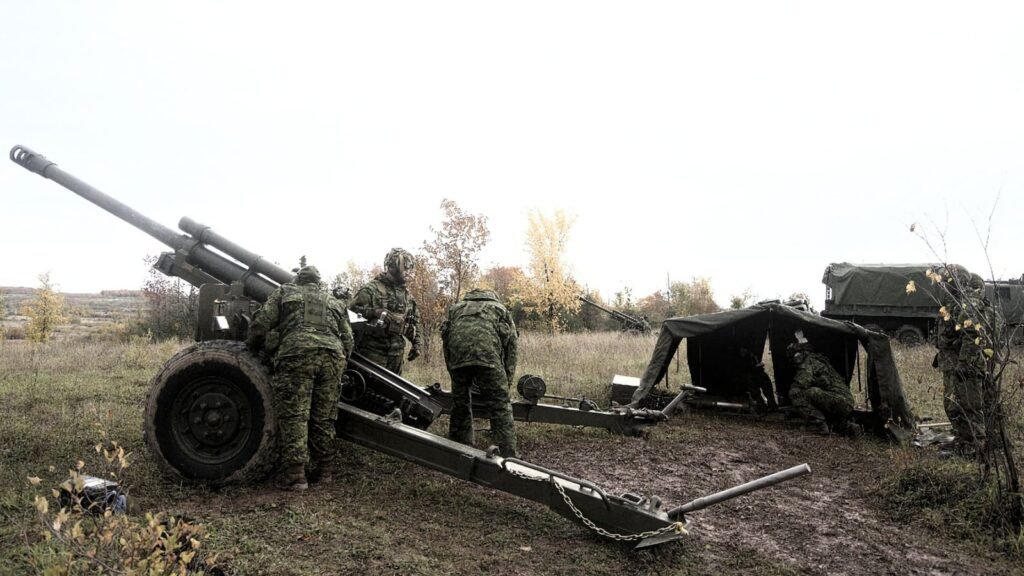
Canadian Prime Minister Mark Carney says his government has considered how Canada would respond to the remote possibility of US military action, describing the scenario as an “extreme tail risk” rather than a likely outcome. Carney said such contingency planning was part of responsible risk management.
In an interview with The New York Times published Wednesday, Carney declined to provide details of the assessment but said governments have a responsibility to consider even highly unlikely scenarios. He said it would be irresponsible not to prepare for such risks, while making clear that military action was not Canada’s base-case expectation.
Carney’s comments come against the backdrop of President Donald Trump’s repeated statements about Canada becoming the 51st US state. Trump has argued that the two countries would be better off without their existing border and has used tariffs and other economic pressure as part of his campaign to push the idea.
However, there is no confirmed statement from Trump saying that he plans to invade Canada. When asked in January 2025 whether he would use military force to annex the country, Trump explicitly answered “no — economic force,” saying he would seek to use economic pressure instead.
The distinction has become central to the latest discussion. Carney’s remarks concern Canada’s assessment of a hypothetical military scenario; they do not indicate that Ottawa has evidence of an American invasion plan or that Washington has ordered preparations for military action against Canada.
Canadian Defence Minister David McGuinty has also sought to place the comments in the context of routine military planning. Canadian officials have declined to discuss the details of any contingency assessment, while describing the possibility of US military action as an extremely remote risk.
The issue comes as relations between the neighbouring countries have undergone significant strain. Trump’s efforts to pressure Canada economically, including tariffs and his continued advocacy for Canadian statehood, have encouraged Ottawa to pursue greater economic and strategic diversification. Carney has been seeking stronger relationships with Europe and other international partners as Canada attempts to reduce its dependence on the United States.
For Canada, the significance of Carney’s disclosure is therefore less about an imminent military threat and more about how dramatically Ottawa’s assessment of its relationship with Washington has changed. A scenario that would once have been regarded as virtually unthinkable has now been included among the extreme risks Canada’s government says it has considered.
Sources: BBC News, CBC News, Fox News, The Independent, National Post, CTV News, The Canadian Press and Reuters.