
U.S. intelligence says Saudi Arabia has not ruled out nuclear weapons. The assessment scrutinizes Washington’s civilian nuclear agreement.
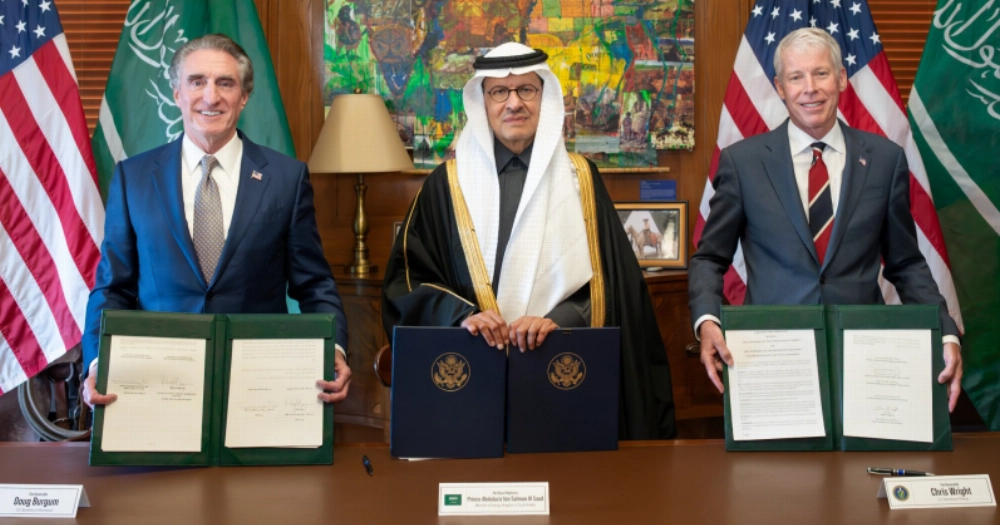
U.S. intelligence assessments provided to Congress indicate that Saudi Arabia has not ruled out developing a nuclear weapons program, according to U.S. officials cited by The Washington Post. The assessment has intensified scrutiny of a civilian nuclear cooperation agreement between Washington and Riyadh that was signed earlier this year.
The intelligence finding comes as Congress reviews the agreement, which is intended to support the development of nuclear power in Saudi Arabia through U.S. technology, equipment and expertise. The agreement has drawn attention because of provisions concerning uranium enrichment, a process that can be used to produce fuel for civilian reactors but also can provide material that could be further processed for weapons.
According to reporting on the agreement, Saudi Arabia would initially be limited to uranium enrichment below 5%. A subsequent study and written agreement could potentially allow enrichment to levels below 20%. The agreement also does not require Riyadh to adopt the International Atomic Energy Agency’s Additional Protocol, which provides for expanded inspection and monitoring powers.
The U.S. intelligence assessment does not establish that Saudi Arabia has decided to build a nuclear weapon. Rather, it indicates that the kingdom has not eliminated that option, according to officials familiar with the classified material. Saudi authorities have described their nuclear plans as civilian and peaceful, while the U.S. State Department has said Washington does not support a Saudi nuclear weapons program.
The agreement is currently subject to a 90-day congressional review process. Lawmakers have raised questions about whether the proposed arrangements provide sufficient safeguards against the diversion of nuclear technology or material for military purposes. The debate comes amid wider concerns about nuclear proliferation in the Middle East and the effect of Iran’s nuclear activities on regional security.
The United States and Saudi Arabia signed their civil nuclear cooperation agreement in July as part of broader efforts to strengthen bilateral ties and expand Saudi Arabia’s domestic energy capacity. Saudi Arabia has been seeking to develop nuclear power as part of its longer-term plans to diversify its energy system, while Washington has viewed nuclear cooperation as an area for deeper strategic and commercial engagement.
The latest intelligence assessment is therefore likely to remain part of congressional scrutiny of the agreement, but it does not by itself demonstrate that Riyadh has begun a nuclear weapons program. Any future decision by Saudi Arabia to pursue such a program would represent a significant change from its stated civilian nuclear objectives and would have implications for international nonproliferation efforts.
Sources: Information from The Washington Post, The New York Times, i24NEWS and the Center for Strategic and International Studies was used to report and cross-check this story.