
Trinidad’s Police Academy outlined plans to grow the force by thousands of officers. Officials stressed quality training over rapid expansion.
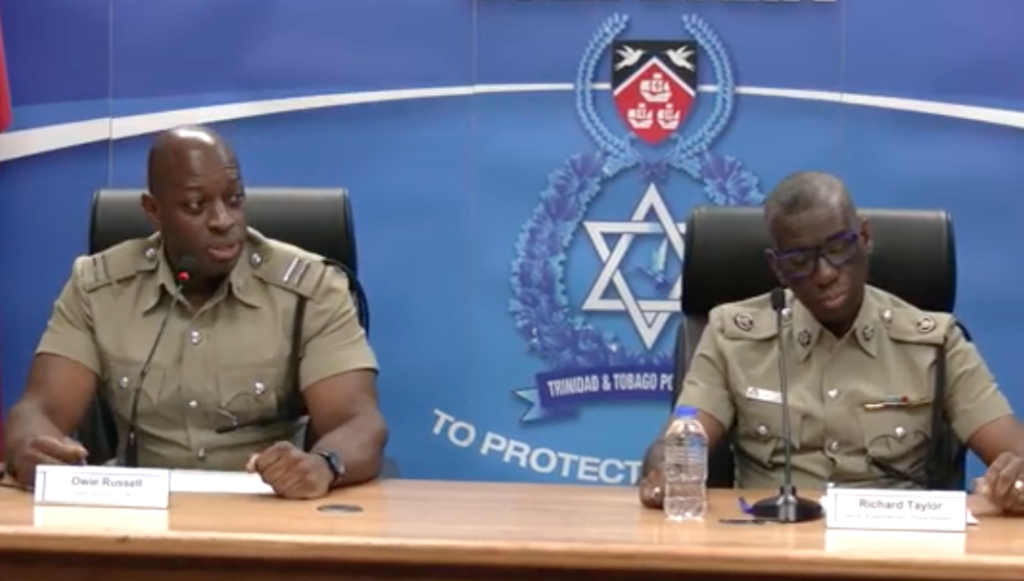
The Trinidad and Tobago Police Service outlined details Thursday of its push to expand the force from 7,884 to 10,200 sanctioned officers over five years, with senior officers stressing that training standards would not be sacrificed for speed. Speaking at a media briefing at the Police Administration Building in Port of Spain, Police Academy head Senior Superintendent Richard Taylor said the latest recruitment drive attracted 9,100 applications, many from candidates holding diplomas, bachelor’s or master’s degrees well above the minimum entry requirement.
Taylor said the expansion differs from earlier recruitment pushes that fell short of their targets, citing a phased, Cabinet-approved five-year plan with year-by-year targets, a commitment to expand the academy’s training capacity, and a goal of sustaining an operational strength of about 7,800 officers, up from the 4,000 to 5,500 typically on duty at any given time. He said the Commissioner of Police estimates that recruiting and paying new officers costs roughly 60% to 65% of the service’s annual overtime bill, and that the drive also aims to recruit university graduates with specialized skills for areas such as forensics and polygraph examination. The Police Academy currently has capacity to train 230 to 250 recruits at a time against an annual target of 600, and recruit training runs six months under a blended residential and field program, followed by a two-year probationary period.
Taylor placed the expansion against Trinidad and Tobago’s shifting crime picture, noting the country recorded 626 murders in 2024, its highest ever, before the toll fell 42% to 369 in 2025, the lowest total since 2014, with the murder detection rate rising from 15% to 20%. He said firearms accounted for more than 80% of killings and cautioned against treating the decline as settled, citing concerns among criminologists over whether the improvement will hold once states of emergency measures lift. Taylor also addressed public trust pressures following the fatal police shooting of Joshua Ramdeo in January, saying recruits themselves had asked for greater emphasis on de-escalation and conflict resolution training, and that between 5,000 and 8,000 officers had undergone retraining in such areas over the past five years.
Asked about new legislation raising the legal age for alcohol, tobacco, cannabis and gambling to 21 or 25, Taylor was asked whether the Police Service should similarly reconsider the minimum enlistment age of 18, given that officers can face split-second, life-or-death decisions early in their careers. He said the TTPS would need to review the law’s final contents before considering any changes to its own recruitment criteria, and ASP Owie Russell said he was unable to say at his level whether the TTPS had been consulted during the bill’s drafting. Taylor also confirmed that all recruits are trained to use body cameras, though full deployment across the service remains limited by cost, and said an active investigation was underway into a recent domestic violence incident that circulated on social media.