
Trinidad’s Senate president again broke a 15-15 tie to pass legislation. It was his second tie-breaking vote in a week.
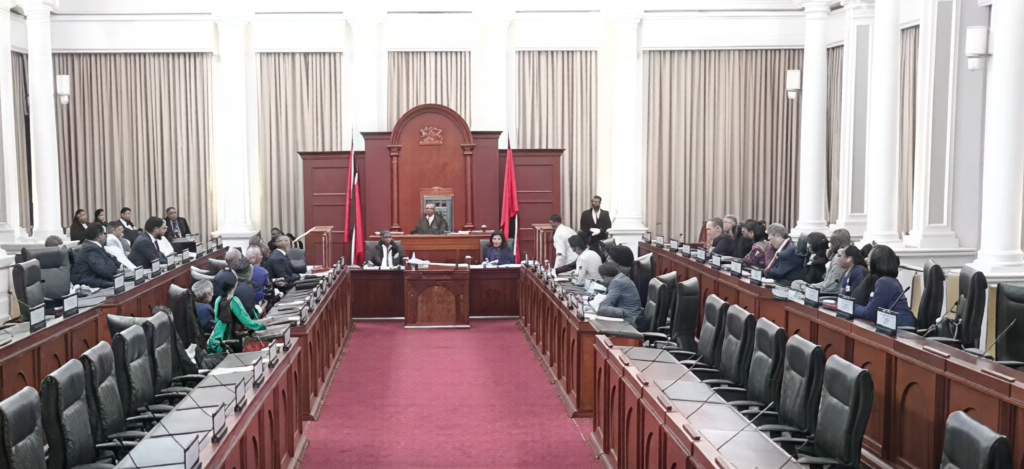
Trinidad and Tobago Senate President Wade Mark used his casting vote late Monday to pass the government’s Public Procurement and Disposal of Public Property (Amendment) Bill 2026, after the vote ended in a 15-15 tie. All 15 government senators voted in favor, while the combined six Opposition and nine Independent senators voted against, leaving the bill one vote short of the simple majority it needed. Mark’s vote brought the final count to 16-15, allowing the bill to pass.
The announcement of the tie and Mark’s casting vote set off a chaotic exchange in the chamber, with senators talking over one another and Mark repeatedly calling for order before proceedings could continue. It was the second time in roughly a week that Mark broke a tied Senate vote in the government’s favor, having done so previously on the Special Operations Bill. When Opposition senators pressed him to explain his reasoning under Standing Order 54, Mark said his position remained consistent with his earlier vote and that there was no settled practice governing how a Senate president’s casting vote should be applied to the standing orders question at hand. He said the standing orders did not require him to give a reason, before directing the Senate clerk to read the bill’s long title, formally acknowledging its passage. At one point, two senators appeared to rise to speak simultaneously, prompting Mark to ask one to take a seat before recognizing the leader of government business.
Mark, a member of the ruling United National Congress, was first appointed a senator in 1995 and has since held several senior roles, including Minister of Public Administration and Speaker of the House of Representatives from 2010 to 2015. He was elected Senate president in May 2025, succeeding Nigel de Freitas, and has also served as Acting President of Trinidad and Tobago during the head of state’s absences. His decisions to use the casting vote to pass, rather than block, government legislation have drawn scrutiny because they depart from a convention some past presiding officers followed of using such votes to preserve the legislative status quo, including his own earlier use of the mechanism in 2025.
Opposition Senate leader Dr. Amery Browne, referred to during the exchange, asked Mark to commit to circulating his research and reasoning to senators, which Mark said he had already addressed in earlier correspondence. The bill, which passed the House of Representatives last week by a vote of 25-10, has drawn criticism from opposition and civil society figures over provisions that would exempt several sectors from oversight and limit the powers of the Procurement Regulator.
The Senate proceeded after the vote to consider a motion adjourning the sitting to Friday, Oct. 2, 2026, moved by the leader of government business.