
Prison officers are being trained for supervised reintegration work. Maharaj also highlighted prisoner pardons and criminal records reform.
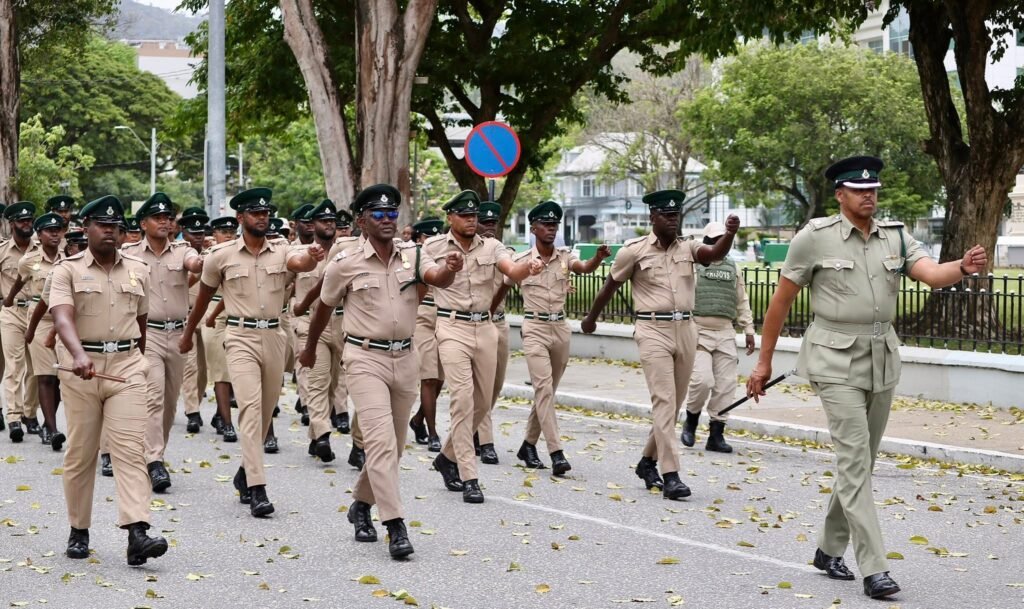
Prison officers are being trained to become parole officers, Justice Minister Devesh Maharaj said Monday, as the Ministry of Justice and the Trinidad and Tobago Prison Service prepare for the rollout of the Parole Act, 2026.
Speaking at a restorative justice symposium, Maharaj said the ministry and the Prison Service are working together to equip officers for a shift from custodial duties to the supervised reintegration of offenders into society. He said he was pleased to note that the ministry, in partnership with the Prison Service, is facilitating the training in preparation for the rollout of the parole legislation.
Maharaj described the change as “a profound professional shift.” Officers whose careers were built on custody are now being equipped for a role based on supervised reintegration, he said.
Parole officers and the Parole Act, 2026

The Parole Act, 2026 was assented to on May 27, 2026, according to the Parliament of Trinidad and Tobago, and was published in the Gazette on June 4, 2026. The Act comes into force on a date fixed by the President by Proclamation, and Parliament’s website listed the legislation as awaiting proclamation. Parliament’s records show the bill passed the House of Representatives on May 13 and the Senate on May 19, 2026.
Under the Act, a parole officer is a prison officer assigned responsibility for administering parole. It directs the Commissioner of Prisons to assign “suitably qualified and trained” prison officers as parole officers.
The Act gives those officers a range of duties. A parole officer must carry out a rehabilitative needs assessment of each offender soon after reception and calculate the dates on which the offender becomes eligible for partial and full parole. Parole officers also prepare structured plans for temporary absence and work release, supervise parolees and report to the Parole Board on whether offenders have complied with their orders. The board makes recommendations to a Court, which decides whether to grant parole.
The Act applies to offenders sentenced to ten years or more, including life sentences. A prisoner serving a life sentence becomes eligible for partial parole after 15 years and for full parole after 20 years. For other sentences, partial parole eligibility comes after one-quarter of the sentence and full parole after one-half, subject to the board certifying that partial parole was completed successfully. The offender cannot be recommended for parole unless he or she successfully takes part in all prescribed rehabilitation programmes.
Maharaj has linked the new system to gaps in rehabilitation. During debate on the bill, he said only 57 officers were assigned to prison rehabilitation programmes, the Trinidad Express reported. The Express put the prison population at about 3,500, while the Trinidad and Tobago Guardian reported more than 3,000 inmates. The Guardian also reported that Maharaj told the Senate that rehabilitation would become mandatory under parole.
The remarks reviewed did not say how many prison officers are in training as parole officers, how long the training will last or when the President will proclaim the Act.
Pardons and criminal records reform
Maharaj also announced that, for the first time in several years, prisoners are being granted pardons. He said several applications were received for consideration. As chairman of the Advisory Committee on the Power of Pardons, he said he sees numerous applications from both prisoners and non-prisoners and has recommended more than 65 applications to the President. The remarks provided did not specify how many pardons have been granted.
The justice minister also highlighted reforms concerning criminal records, including the Criminal Records (Rehabilitation of Offenders) Act 2026. He said the law will help remove the criminal records of people with minor convictions once a determined rehabilitation period has passed without further offending. Maharaj said that would help dismantle the lifelong stigma of a record that blocks employment, housing and credit, and restore full civic participation. The remarks did not give a commencement date for that law.
The training of prison officers as parole officers is among several initiatives Maharaj highlighted as aimed at strengthening the local justice system.
This report is based on the transcript of Justice Minister Devesh Maharaj’s remarks supplied by Aurax News, the Parliament of Trinidad and Tobago’s Parole Bill page and the Parole Act, 2026.