
A powerful, slow-moving nor’easter is continuing to batter the U.S. Northeast, bringing heavy rain, coastal flooding and strong winds from the Mid-Atlantic to New England.
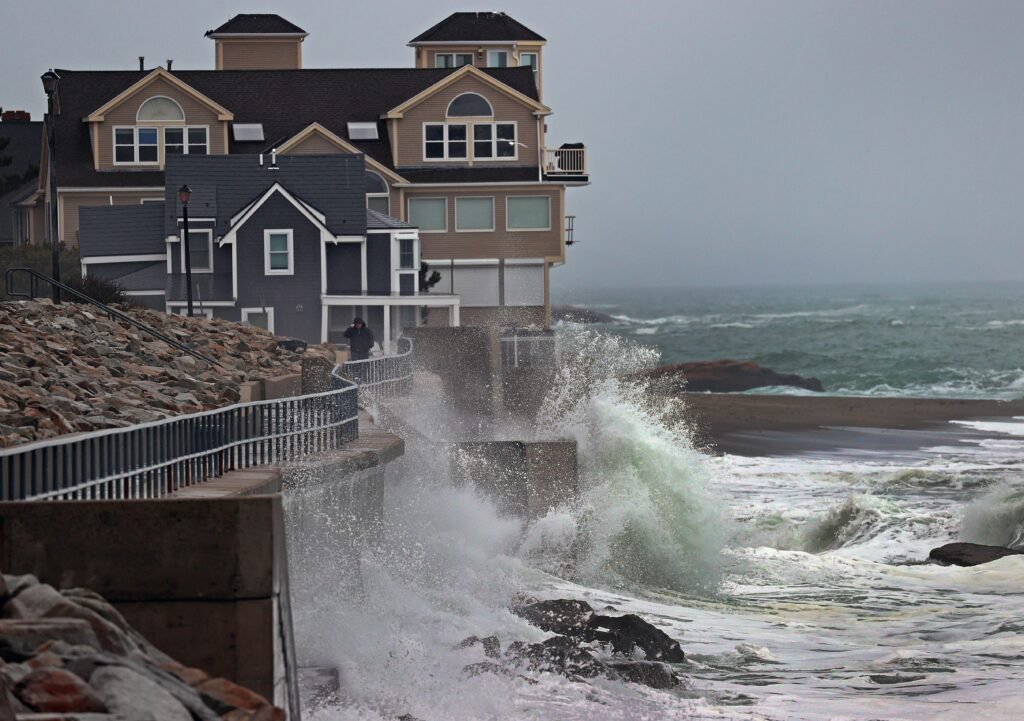
The storm has left about 100,000 customers without electricity at various points, while coastal communities in New York, New Jersey and New England have experienced flooding and dangerous surf. At least one person died in Brooklyn after being struck by a falling tree, according to New York City officials.
The storm remained active Sunday morning, with another round of tidal flooding developing as high tide reached coastal areas. Moderate coastal flooding was expected from coastal Virginia through Long Island, while additional flooding remained possible across southern New England.
The National Weather Service warned of continued strong winds, with gusts potentially reaching 50 mph from the Delmarva Peninsula through central Massachusetts. The Jersey Shore and parts of Connecticut remained under high-wind warnings, with stronger gusts capable of bringing down trees and power lines.
New York City and surrounding areas have also faced significant flooding. CBS New York reported that some parts of Queens experienced water ranging from several inches to more than a foot, while flooded streets in New York and New Jersey prompted some residents to use kayaks to move through affected areas.
Rainfall totals of 2 to 4 inches were expected across the New York City region, with higher amounts possible closer to the coast. Parts of Long Island and southern New England could receive 3 to 5 inches, while localized totals of up to 5 to 7 inches were possible farther north.
The storm has also disrupted travel and major events. Hundreds of flights were canceled, while concerts, sporting events and festivals across the Northeast were postponed or called off because of the dangerous conditions.
The nor’easter is unusual for September. Such storms are much more common later in the autumn and winter, when colder air masses create the conditions that typically fuel them. Meteorologists also noted that trees are still fully leafed at this time of year, increasing the potential for wind-related damage and power outages.
The storm is expected to continue affecting parts of the Northeast through Monday before gradually moving away from the region. Heavy rain, strong winds and coastal flooding will remain concerns as communities deal with successive high tides and saturated ground.
Sources: Associated Press, The Washington Post, CBS News, NBC News and New York Daily News.