
The landmark 2018 ruling and the legal battle that followedA constitutional challenge by Jason Jones led to a landmark High Court ruling in 2018, before the Attorney General appealed.
The landmark 2018 ruling and the legal battle that followedA constitutional challenge by Jason Jones led to a landmark High Court ruling in 2018, before the Attorney General appealed.
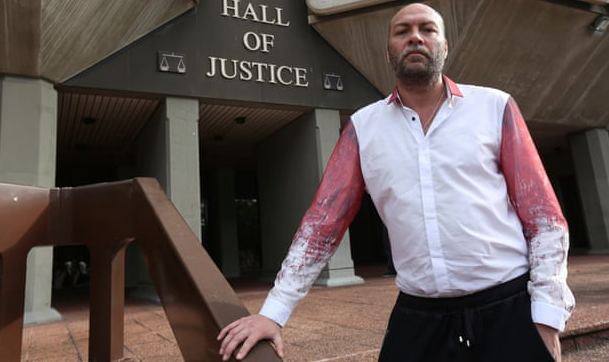
A landmark High Court judgment delivered on April 12, 2018, marked a significant moment in Trinidad and Tobago’s constitutional and human rights history, after Justice Devindra Rampersad ruled that provisions of the Sexual Offences Act criminalising consensual same-sex intimacy between adults were unconstitutional.
The decision followed a constitutional challenge brought by Jason Jones, who contested sections 13 and 16 of the Sexual Offences Act. These provisions criminalised acts classified under the law as buggery and serious indecency, carrying significant penalties, including imprisonment.
Jones argued that the legislation violated fundamental rights guaranteed under the Constitution, including the rights to privacy, liberty and equality. His challenge centred on whether the State could constitutionally criminalise private, consensual sexual activity between adults.
In his judgment, Justice Rampersad found that the challenged provisions were unconstitutional to the extent that they criminalised consensual sexual activity between adults. The ruling effectively removed the criminal penalties applicable to such conduct within the scope of the court’s declaration, representing a significant challenge to legislation inherited from the country’s colonial past.
However, the decision did not end the legal dispute. The Attorney General appealed the ruling, bringing the matter before the Court of Appeal and placing the constitutional interpretation of the legislation at the centre of further proceedings.
A central issue in the appeal was section 6 of the Constitution, commonly referred to as the savings law clause. The provision protects certain laws that existed before the Constitution came into force in 1976 from being declared inconsistent with fundamental rights provisions.
On March 25, 2025, the Court of Appeal delivered its judgment in a divided decision. Justices Nolan Bereaux and Charmaine Pemberton formed the majority, while Justice Vashiest Kokaram dissented.
The majority allowed the Attorney General’s appeal, concluding that the relevant historical provisions were protected by the Constitution’s savings law clause. The decision restored the buggery offence in modified form, reducing its maximum penalty from 25 years to five years’ imprisonment. It also restored the older gross-indecency provisions, carrying a maximum two-year prison sentence, in place of the relevant serious-indecency provisions concerning consenting adults.
Justice Kokaram disagreed with the majority, maintaining that the original High Court ruling should stand. His dissent highlighted the continuing constitutional debate over the protection of individual rights and the extent to which older legislation could be shielded from judicial scrutiny.
The two decisions illustrated a significant disagreement within the judiciary over the relationship between inherited legislation, constitutional protections and the authority of the courts. What began as an individual constitutional challenge had developed into a major legal dispute over the interpretation of Trinidad and Tobago’s Constitution and the limits of the savings law provisions.
Sources: Human Dignity Trust, April 12, 2018; High Court of Justice of Trinidad and Tobago, Jason Jones v Attorney General, CV2017-00720; Court of Appeal of Trinidad and Tobago, Attorney General v Jason Jones, Civil Appeal No. P337 of 2018, judgment delivered March 25, 2025.