
Iran says it is ready for war but prefers diplomacy. The US rejected Tehran’s proposal to reopen Hormuz.
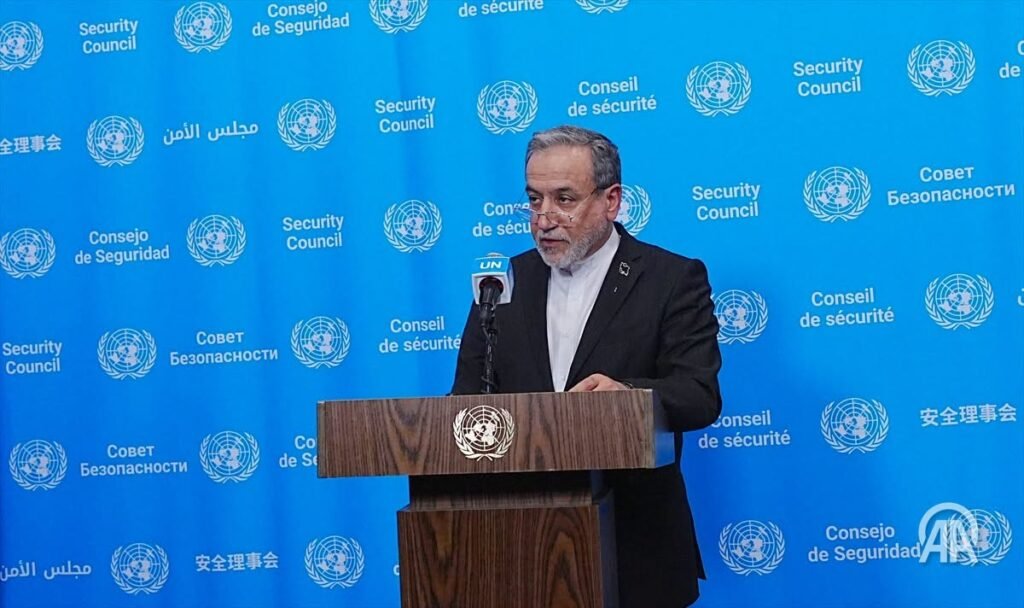
Iran’s foreign minister, Abbas Araghchi, said Sunday that Tehran is fully prepared for war if fighting with the United States resumes. He also said that only a negotiated solution can end the standoff over the Strait of Hormuz. His statements followed President Donald Trump’s rejection on Saturday of an Iranian proposal, described by Al Jazeera as a seven-day roadmap, to reopen the waterway and end the conflict, which also involves Israel.
Iran announced the proposal last week at the United Nations General Assembly in New York and said it had been passed to Washington through Qatari mediators. Trump told reporters the plan reflected Iranian weakness. In a separate interview with Axios, he said the terms were not the deal he wanted but that he expected U.S. negotiators to hold more talks this week. Axios, citing unnamed sources, reported that indirect talks could begin as early as Monday. Araghchi said mediators had not yet formally relayed a U.S. rejection to Tehran and that Iran would decide its next step once they did. He said any reopening of the strait depends on Iran’s conditions being met.
The dispute centers on one of the world’s key shipping routes. The United States has imposed an economic blockade on Iran, while Iranian attacks on vessels have sharply reduced traffic through the strait, according to RTHK. Trump has repeatedly said the U.S. controls the waterway. Iranian army commander Amir Hatami described the war as at a critical stage and said Iran would not accept being unable to trade while other powers use regional waterways.
Separately, Iran’s Revolutionary Guards said Sunday they had seized a U.S. underwater drone in the strait and were examining it to recover data. A U.S. Central Command spokesman, Capt. Tim Hawkins, denied the claim, saying all American unmanned systems in the region are accounted for. The claim could not be independently verified. It follows an earlier Iranian claim, from September, of a captured U.S. underwater vehicle, which U.S. officials said had malfunctioned and held no sensitive data.
Sources: This report draws on information from Al Jazeera, RTHK, Axios (as cited by RTHK), Euronews and ANI.