
Germany rebuilt itself into a global power after 1945. Now a resurgent far right is testing that legacy.
Germany’s transformation after the Second World War is often cited by historians as one of the most significant national rebuilding efforts of the 20th century. Financial support through the U.S.-backed Marshall Plan, combined with rapid industrial reconstruction, a new democratic constitution and, eventually, formal reunification in 1990, helped turn a defeated and divided country into Europe’s largest economy within a few decades. Germany also built an extensive culture of historical remembrance, including memorials, education programs and laws restricting Nazi symbols and Holocaust denial, which many historians credit with shaping the country’s postwar democratic identity.
That legacy is now being tested by the rise of the far-right Alternative for Germany party, known as the AfD. Polling from multiple German and international outlets in 2026 showed the AfD repeatedly reaching record levels of support, at times overtaking Chancellor Friedrich Merz’s conservative CDU/CSU bloc to become the country’s most popular party in national surveys. The party has campaigned largely on anti-immigration policies and has been formally classified in parts of the country by domestic intelligence services as right-wing extremist, a designation the party disputes and has challenged in court.
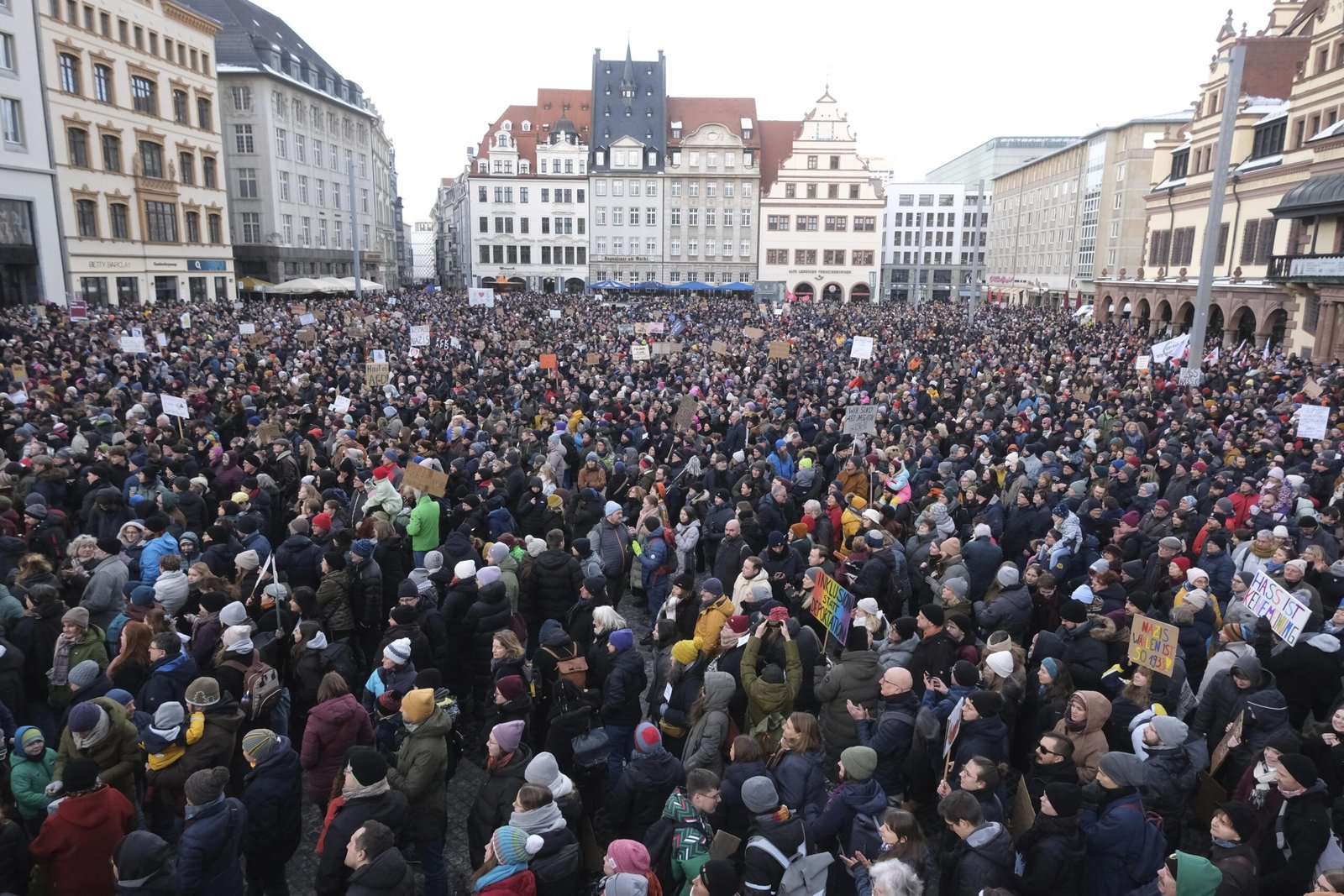
The AfD’s rise has triggered large-scale public pushback, including repeated mass demonstrations across German cities and, at times, tens of thousands of protesters gathering near AfD party events. Support for the party has also fluctuated rather than risen in a straight line, with polling dipping at points following controversies, including reporting on internal party proposals described by critics as echoing Nazi-era policy. Mainstream parties have so far maintained a formal policy of refusing to form governing coalitions with the AfD at the federal level.
Historians and political scientists generally caution against direct comparisons between today’s Germany and the collapse of the Weimar Republic in the 1930s, noting that modern Germany has entrenched democratic institutions, an independent judiciary, a free press and legal safeguards that did not exist in the same form a century ago. At the same time, many of the same analysts say the AfD’s sustained polling strength shows that public dissatisfaction with mainstream parties can translate into support for far-right movements even in a country with Germany’s specific historical safeguards, making the party’s trajectory a closely watched test of those institutions rather than a foregone conclusion in either direction.
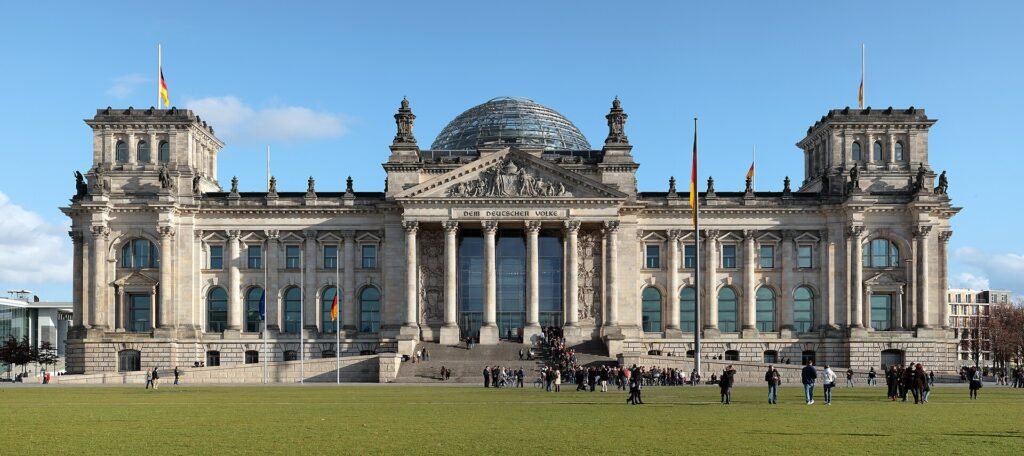
Germany’s postwar rebuilding was not immediate or uncontested. The country was divided among Allied occupation zones, and the Nuremberg trials prosecuted senior Nazi officials for war crimes as part of a broader denazification process intended to dismantle the institutions of the former regime. West Germany was formally established in 1949 under a new constitution designed with safeguards against the kind of executive overreach blamed for enabling Hitler’s rise, while East Germany developed separately under Soviet-aligned rule until reunification in 1990 brought the country back under a single democratic government.
The AfD’s electoral gains have moved beyond opinion polling into actual results at the state level. In 2024, the party won the largest share of the vote in a state election in Thuringia, the first time a far-right party had topped a German state election since the Second World War, though it was ultimately blocked from governing after other parties formed a coalition specifically to exclude it. Similar dynamics have played out in other eastern German states, where the AfD has often finished first or second while remaining shut out of governing coalitions under the mainstream parties’ continued policy of refusing to partner with it, a strategy commonly referred to in German politics as the “firewall.”
Germany’s political shift is not occurring in isolation. Far-right and national-populist parties have gained ground across Europe in recent years, including Marine Le Pen’s National Rally in France, which has become one of the country’s largest parliamentary blocs, and Giorgia Meloni’s Brothers of Italy, which leads Italy’s governing coalition. Political scientists point to this broader European pattern, often linked to concerns over immigration, economic stagnation and distrust of established parties, as evidence that Germany’s trend reflects a continental shift rather than a uniquely German phenomenon — even as Germany’s history gives its particular version of that shift outsized international attention.