
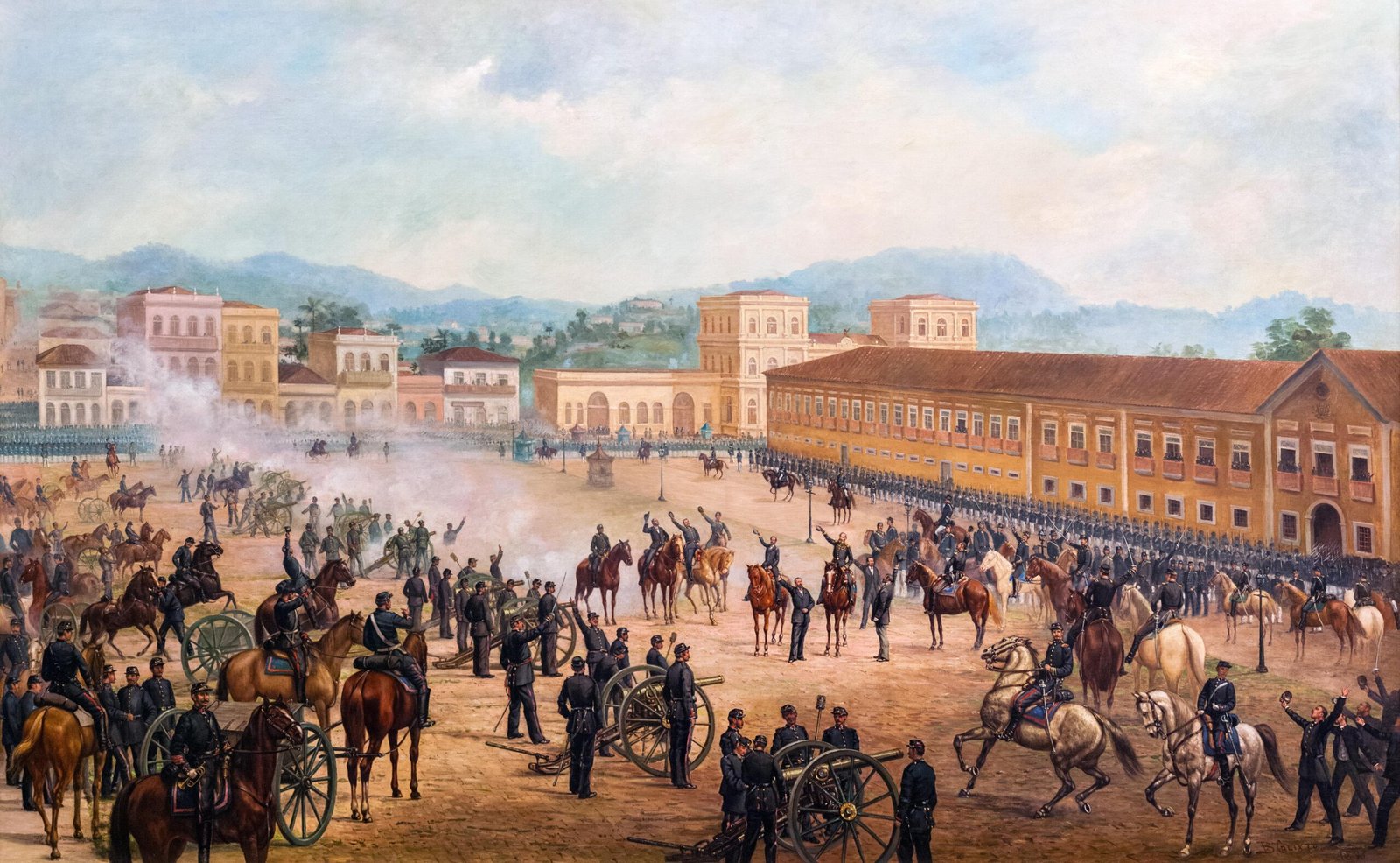
On November 15, 1889, a military-led movement overthrew Brazil’s monarchy and established the country as a republic. Marshal Manuel Deodoro da Fonseca led the movement that removed Emperor Dom Pedro II from power, ending nearly seven decades of imperial rule. A provisional republican government was subsequently established in Rio de Janeiro.
The transition fundamentally changed Brazil’s political system and laid the foundation for the modern Brazilian republic. Although the change initially took place through a military coup rather than a nationwide popular vote, republican government became firmly established, and November 15 remains a national public holiday in Brazil.