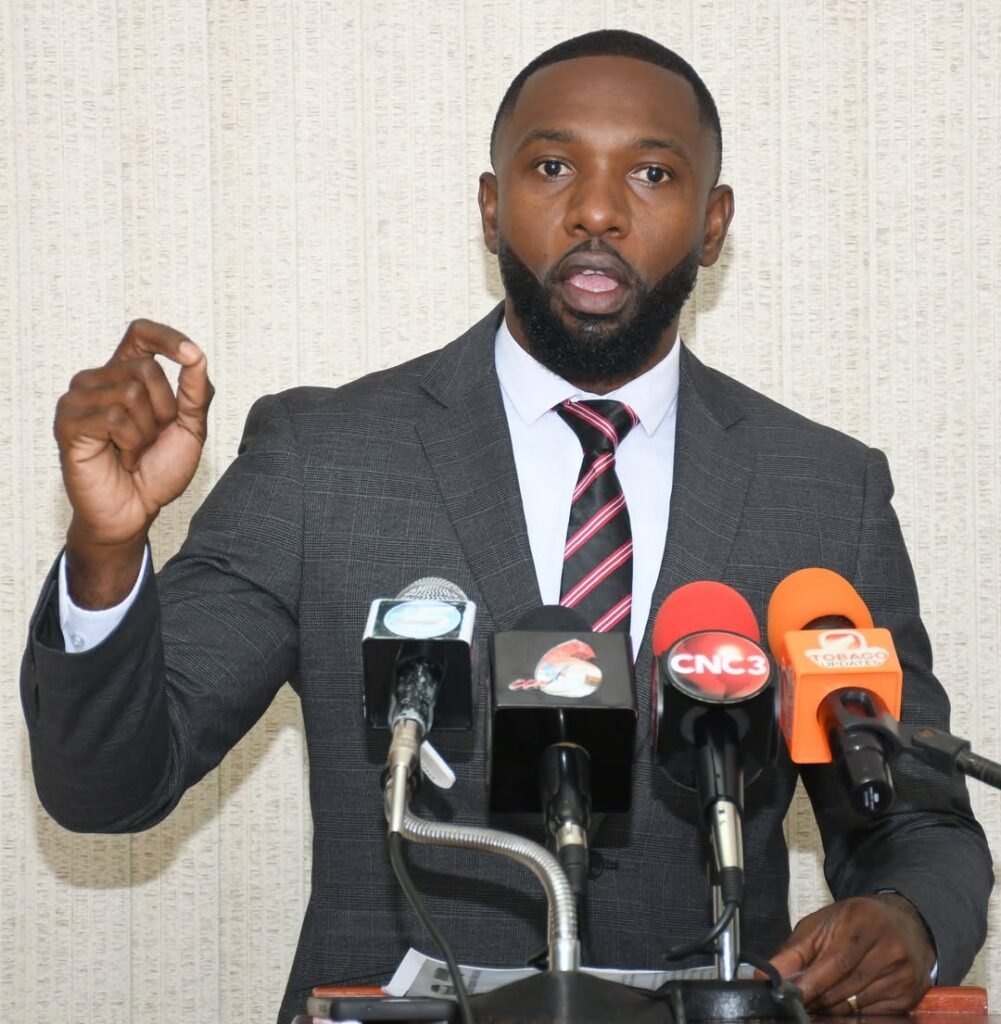
Tobago Chief Secretary Farley Augustine says the island remains dissatisfied with its 2027 budget allocation. Former Minority Leader Kelvon Morris also questions the outcome.
Tobago Chief Secretary Farley Augustine has signalled that the island will continue pressing the central government for a larger share of national resources after receiving a direct allocation of approximately $2.756 billion in the 2027 National Budget.
Augustine said the Tobago House of Assembly (THA) was dissatisfied with the provision announced by Finance Minister Davendranath Tancoo on Monday, October 12, and would continue advocating for improved fiscal treatment through the island’s Members of Parliament.
“These are not the days when we will have members coming to the Parliament to say, look, we’re satisfied even when what is given is not seen,” Augustine said, indicating that the THA would not publicly endorse an allocation it considers inadequate.
The direct allocation represents approximately 4.35 per cent of the national budget. A further $716.5 million is expected to be spent by government ministries on programmes, services and development projects in Tobago, bringing the total expenditure earmarked for the island to approximately $3.473 billion, or 5.48 per cent of the overall budget.
Despite the additional ministerial spending, Augustine said the direct allocation fell short of Tobago’s expectations. He also highlighted a reduction in funding for capital development, stating that approximately $150 million was expected for development projects in the upcoming fiscal year, compared with about $201 million allocated in the previous year.
Augustine said he had consistently advocated for greater investment in Tobago’s development during his years as an assemblyman and throughout his tenure as Chief Secretary. While acknowledging that the latest allocation was not the lowest in the island’s history, he maintained that Tobago had grounds to seek improved funding.
The THA is expected to outline its response in the coming days, including how it intends to reprioritise the more than $2.7 billion allocated directly to the island government.
Former Minority Leader Kelvon Morris also criticised the budgetary outcome, arguing that Tobago had received less funding than it could have secured under an alternative arrangement.
“Imagine rejecting 6.8% guaranteed which equates to $4.3B this year to beg for a measly 4.36% which equates to $2.7B,” Morris said.
He estimated that the difference between the two amounts was approximately $1.6 billion and questioned the outcome of the allocation process.
“In essence Tobago got $1.6B less than what it should have gotten,” Morris said, before asking, “Who’s winning?”
The figures cited by Augustine and Morris reflect different aspects of the budget debate. The THA’s direct allocation is separate from additional expenditure expected to be undertaken by central government ministries in Tobago, while Morris’s comparison concerns the alternative funding arrangement he referenced.
The dispute places renewed attention on the distribution of national resources between Trinidad and Tobago and the funding available for the island’s development priorities. The final implications for Tobago’s programmes and infrastructure will depend on the approved allocations, actual expenditure and the THA’s decisions on how to distribute its available funding.