
The last U.S. troops left Iraq’s federal territory Wednesday after 23 years. Iran urged Americans to vote out Trump’s allies.
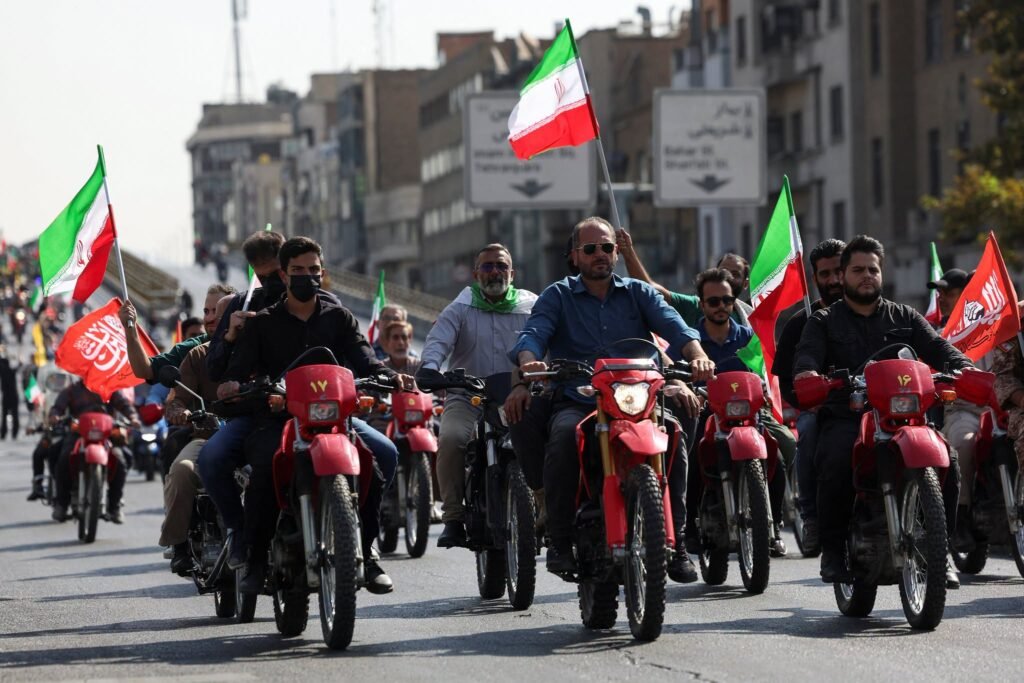
The last U.S. troops withdrew from their remaining bases across Iraq’s federal territory on Wednesday, ending a 23-year American military presence that began with the 2003 invasion to topple Saddam Hussein and concluding the 12-year coalition mission against the Islamic State group. The departure, celebrated by Tehran as a strategic victory, was negotiated between Washington and Baghdad in 2024 under the Biden administration and proceeded on schedule despite the outbreak of the U.S. war with Iran seven months ago.
In an unusual move, Iran’s Islamic Revolutionary Guard Corps published a 26-page letter Tuesday urging American voters to remove President Donald Trump’s congressional allies from office ahead of the Nov. 3 midterm elections, and to reject U.S. support for Israel and military intervention abroad, Reuters reported. Iranian officials framed the withdrawal as a triumph for what Tehran calls its resistance against American influence in the region. Trump, who broke with Republican orthodoxy in 2016 by calling the original Iraq invasion a mistake, again predicted Iran’s swift surrender in the ongoing conflict. A Reuters/Ipsos poll published Sept. 21 found only 17% of Americans approved of Trump’s handling of the cost of living, the issue voters cited as most likely to shape their choices in November, while just 34% approved of his strikes on Iran.
Iraq’s Defense Ministry said the final contingent of American advisers departed Al-Asad Air Base in Anbar province, a facility that hosted U.S. forces for more than two decades, with the Iraqi army assuming full control and American forces removing all military equipment. U.S. forces remain only at Harir Air Base in the semi-autonomous Kurdistan region, where a small contingent will continue supporting counter-ISIS operations; Washington has not ruled out joint operations relaunching from Al-Asad if needed. At its peak, the U.S. maintained roughly 170,000 troops in Iraq; more than 4,500 Americans have died in the country since 2003.
The withdrawal was initially tied to a Sept. 30 deadline for disarming non-state militias, but Iraqi officials confirmed that deadline has been pushed to June 2027 after Iran-backed groups, including Kataib Hezbollah and Harakat al-Nujaba, both designated terrorist organizations by the U.S., rejected disarmament outright. Iraqi Prime Minister Mohammed Shia al-Sudani has said the departure removes any remaining justification for armed groups outside state control, though powerful factions close to Iran have shown no sign of complying. Analysts say the American exit strengthens Iran’s regional position at a delicate moment, with Tehran’s allies, including Yemen’s Houthis, Lebanon’s Hezbollah and Iraqi militias, already implicated in a Sept. 10 attack that knocked Saudi Arabia’s East-West oil pipeline offline. Qatar continued shuttle diplomacy Tuesday aimed at ending the broader war between Iran and the United States, even as the Iraq withdrawal reshapes the region’s security balance.
Sources: This report is based on information from Reuters, the Associated Press, Al-Monitor and Iraq’s Defense Ministry.