
|
Getting your Trinity Audio player ready...
|
Congo is running short of health workers as Ebola spreads. WHO warns insecurity, displacement and staffing gaps are hindering the response.
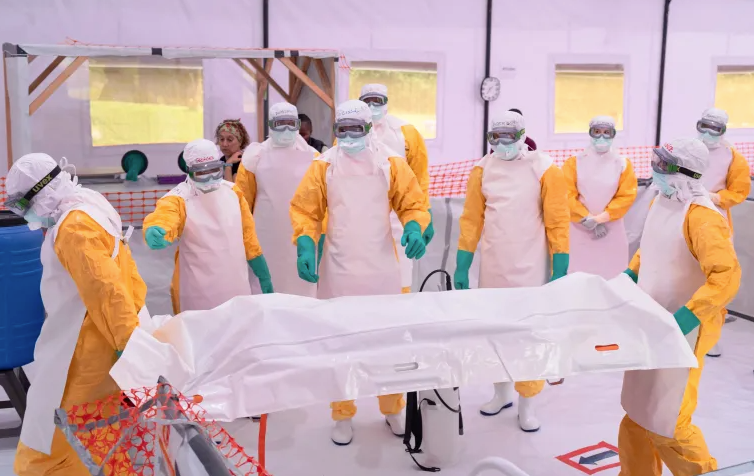
The Democratic Republic of the Congo is running short of health workers as the country’s largest Ebola outbreak continues to expand, placing additional pressure on treatment centres already operating under difficult conditions. The World Health Organization has warned that insecurity, population displacement and shortages of medical personnel are complicating efforts to contain the disease.
The outbreak is caused by the Bundibugyo virus, a form of Ebola for which there is currently no licensed vaccine or specific treatment. WHO reported that by September 7, more than 6,700 confirmed cases and more than 3,200 deaths had been recorded in the Democratic Republic of the Congo, with transmission reported across 61 health zones in six provinces. More recent government figures cited by the Associated Press put the totals at 7,541 confirmed cases and 3,639 deaths as of September 19.
North Kivu has become a particular concern. According to WHO figures cited in recent reporting, cases there increased by 73% over three weeks, even as some indicators improved in Ituri, the outbreak’s epicentre. The shortage of health workers is making it harder to staff treatment centres and maintain surveillance and patient care as the disease moves into additional communities.
The outbreak is also unfolding amid insecurity and large-scale displacement. WHO says these conditions are limiting access to affected communities and interfering with case detection, contact tracing and other response activities. Highly mobile populations and travel along regional routes have increased concerns about further geographic spread, prompting authorities and international agencies to strengthen surveillance at borders and major transport corridors.
The International Organization for Migration has called for increased international support as it expands disease surveillance at displacement sites and along major travel routes. IOM Director General Amy Pope said the response had received less than a third of the funding required, warning that the combination of Ebola, conflict and displacement was placing additional pressure on vulnerable communities.
Health workers themselves are among those at risk. Congo began vaccinating frontline health personnel in September using Ervebo, a vaccine licensed for Ebola caused by the Zaire strain. Because the current outbreak involves the different Bundibugyo virus, however, WHO says the vaccine’s effectiveness against the current disease remains uncertain and recommends its use for this outbreak within research protocols.
Despite the challenges, international and Congolese health authorities continue to expand surveillance, treatment capacity, vaccination research, clinical trials and community engagement. WHO has assessed the risk within Congo as very high and the risk to neighbouring countries as high, while assessing the global risk as low based on available information.
The scale of the outbreak has nevertheless raised concern among international health agencies. WHO has described the epidemic as the largest Ebola disease outbreak ever recorded in the Democratic Republic of the Congo, while the combination of continuing transmission, health-worker shortages and insecurity is making the response increasingly difficult.
Sources: NBC News, UN News, International Organization for Migration, BBC News, World Health Organization and Associated Press.