
Prime Minister Andrew Holness says Jamaica stands with Cuba’s people. He rejects foreign policy built on outdated ideology.
MONTEGO BAY, Jamaica — Jamaica’s Cuba solidarity stands despite the government’s abstention from a recent United Nations vote on the U.S. embargo against Cuba, Prime Minister Andrew Holness said Sunday, while insisting his administration will not pursue a narrow foreign policy tied to the past.
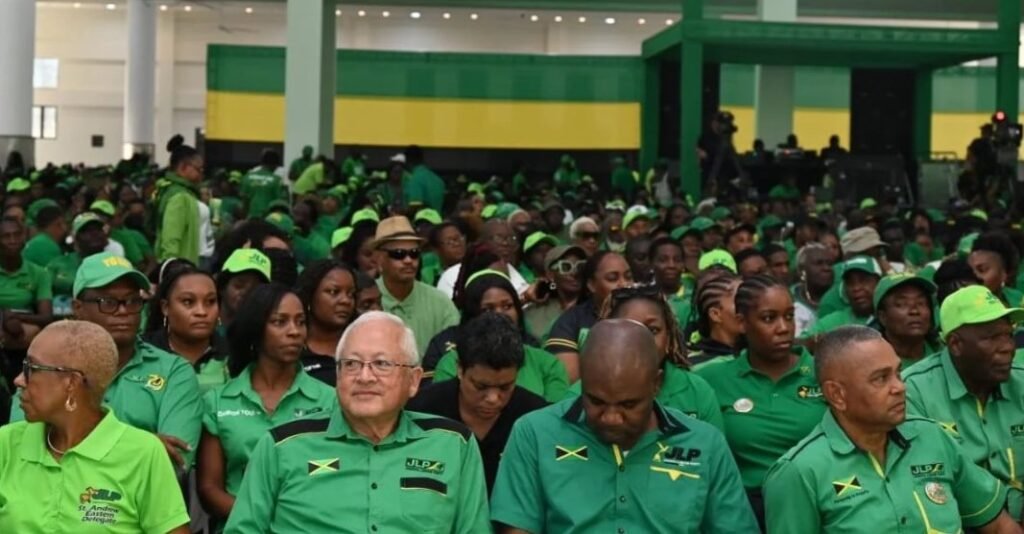
Holness spoke on Nov. 15 at a conference of the governing Jamaica Labour Party (JLP) in Montego Bay, St James. The Jamaica Observer described the gathering as the party’s 83rd annual conference, while The Gleaner reported it as the JLP’s Special Delegates Conference at the Montego Bay Convention Centre.
“We stand in solidarity with the people of Cuba,” Holness told the gathering. He added that he wants Cubans to enjoy the same political and economic freedoms Jamaicans have, The Gleaner reported.
What Holness said about Cuba solidarity
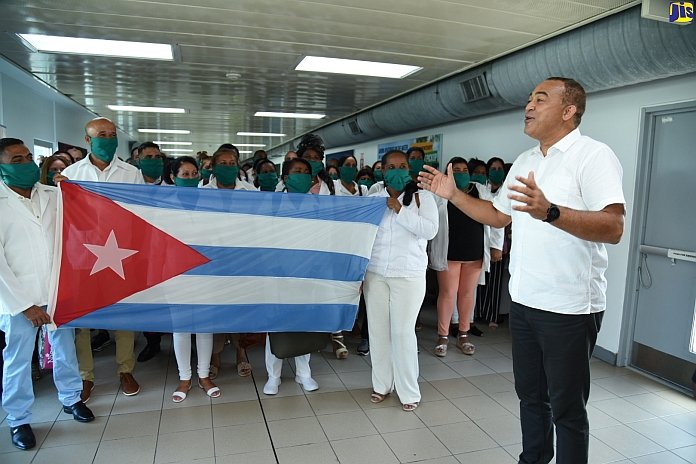
Holness said Jamaica continues to cooperate with the Cuban government and welcomes Cuban professionals to work in the country’s health, education and other systems, in keeping with Jamaican and international law, the Observer reported. He said the arrangement is similar to those Jamaica has with Ghana and Nigeria, under which professionals work in Jamaica on terms that respect workers’ rights.
The prime minister said the government believes constructive dialogue between the United States and Cuba, together with greater reforms in Cuba, offers the only practical path to ending Cuba’s long economic isolation and avoiding conflict in the region.
Holness said the anchor of Jamaica’s foreign policy was set by JLP founder Sir Alexander Bustamante, who declared that Jamaica is “with the West.” According to the Observer, Holness explained that, when the statement was made, it meant Jamaica’s votes in international forums would seek to uphold liberal democracy, human rights, free markets, freedom of political and religious belief, respect for international law, sovereign equality, territorial integrity and the peaceful resolution of disputes.
He said today’s foreign policy continues those underpinnings by combining principled diplomacy with the pursuit of national development interests. Sovereignty, security, economic independence and the wellbeing of Jamaicans are at the centre of government decisions, he said.
Holness added that Jamaica supports a strong multilateral system that protects the voice of small states. But he said that under his leadership Jamaica will not be tied to any single ideological agenda or grouping, or be drawn into unnecessary conflicts or support for outdated rhetoric. The Observer and The Gleaner reported slightly different wording for that remark.
Cuba solidarity and practical foreign policy for Jamaicans
The prime minister said foreign policy must have practical meaning for Jamaicans. By the Observer’s account, he said it should help producers reach overseas markets, attract investment that creates decent jobs and secure partnerships that build infrastructure. He said it should also help Jamaica stop illegal guns, combat organized crime and protect its borders, while giving the country access to new technology, strengthening education and building resilience.
Holness said foreign policy should also protect Jamaicans abroad and create opportunities for the diaspora to invest knowledge, experience and resources at home. He said the needs of Jamaicans will govern the government’s choices.
Opposition criticism over the UN abstention
The Cuba solidarity message comes as the opposition People’s National Party (PNP) has taken issue with the government’s decision to abstain from a UN vote calling for an end to the U.S. embargo against Cuba, the Observer reported. The abstention came a day after Jamaica’s Parliament debated and approved a motion calling for the embargo to be lifted. The Observer said that debate has been held every year for more than 30 years and has always had bipartisan support.
The opposition has also criticized the government’s decision to curtail the Cuban medical programme, under which large numbers of Cuban doctors and nurses worked in Jamaica for decades, the Observer reported.
Holness took aim at the PNP, questioning whose interests it represents. The Gleaner reported that he said critics are mistaken about the abstention and that the government is not afraid to explain its reasons if asked.
Neither report said whether the government plans further steps on the Cuban medical programme or on the embargo issue at the UN.
This report is based on the Jamaica Observer’s and The Gleaner’s coverage of Prime Minister Andrew Holness’s address on Sunday, Nov. 15, 2026.