
Unions say 4 million joined Spain’s general strike. Clashes later erupted in Madrid and Barcelona, with 73 arrests.
MADRID — Four million workers took part in Spain’s first general strike in 14 years, unions said, a turnout equal to about one-fifth of the workforce, though evening clashes broke out in Madrid and Barcelona after what had been largely peaceful protests over housing costs.
Workers set up picket lines despite stormy weather, and large marches took place in Madrid, Barcelona and other cities less than three weeks before a snap general election on Nov. 29. Authorities estimated about 120,000 people marched in Madrid and more than 50,000 in Barcelona. Unions said early participation reached 90% at ports and in the car industry, and described the strike as a success even though turnout was uneven, with the strongest support in coastal regions where housing pressures are most acute.
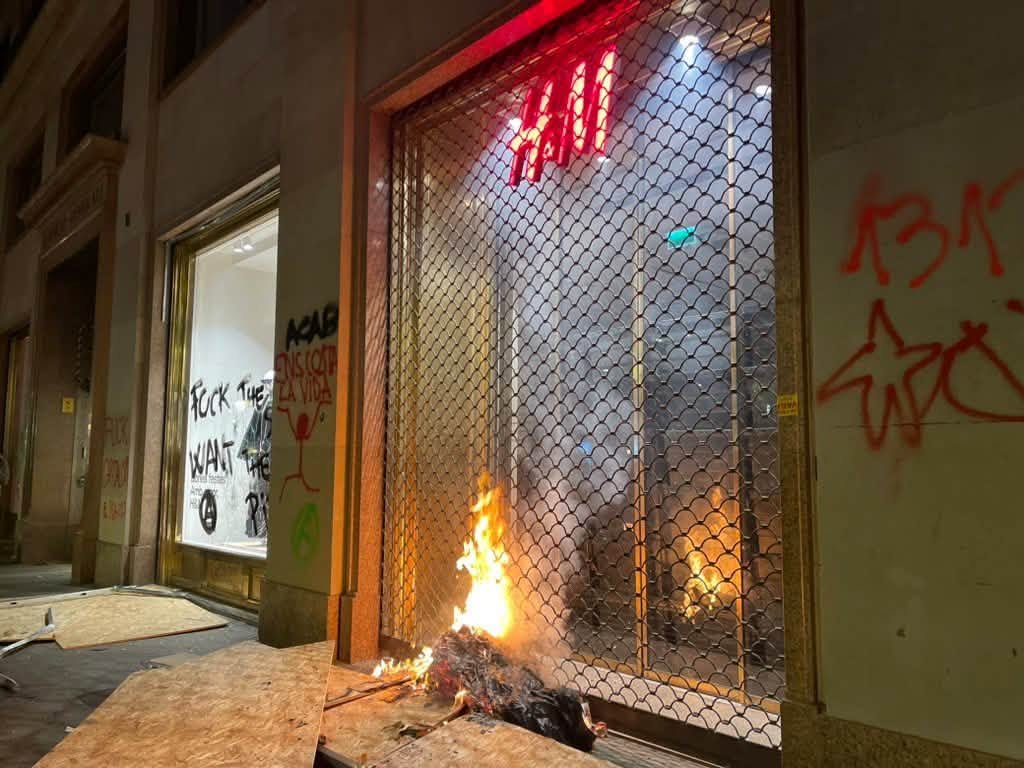
After the main march ended in Barcelona, Reuters footage showed furniture burning in the street, and AFP reported that hooded demonstrators hurled projectiles at police and started fires. An AP photo caption said stores were looted. In Madrid, riot police used foam bullets, tear gas and pepper spray to disperse protesters around the Plaza de España, a Reuters witness said.
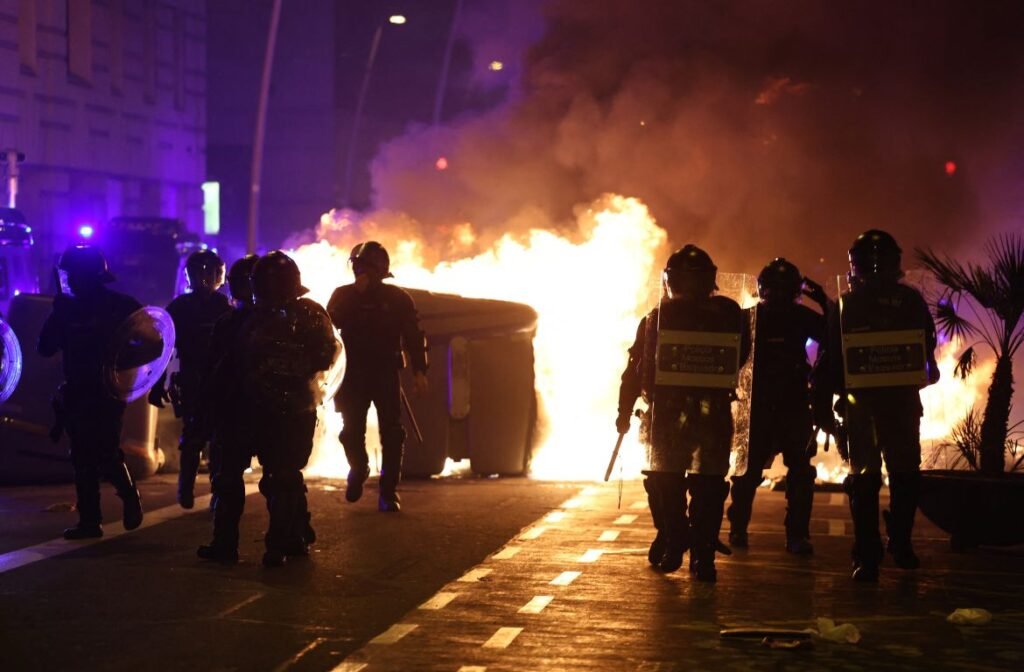
Police reported at least 73 arrests nationwide by 9 p.m. GMT from at least 1,044 incidents linked to the strike, including blockades of offices and industrial estates and the burning of rubbish containers.
The strike was backed by Spain’s two largest unions, UGT and CCOO, and by tenants’ associations angry about rising rents and evictions. It followed a train drivers’ strike on Tuesday, when Renfe said about 40% of long- and medium-distance services were cancelled. The drivers’ union, Semaf, postponed a further strike planned for Thursday to Nov. 23 after the Cabinet approved a decree on rail safety. More rail strikes are planned for Nov. 17 and 23.
Prime Minister Pedro Sánchez called the election after parliament rejected government decrees to curb evictions and limit rent pressures. He hopes to use voter anger over housing to shift attention from a deadly migration incident in Ceuta and last month’s train crash, though his Socialist Party still trails in the polls.
This report draws on coverage by Reuters, AFP and Al Jazeera, with details on the rail strikes from RTÉ and Railin.