
Democrats won both chambers of Congress. Analysts say Trinidad and Tobago’s close ties to Trump could face scrutiny.
Democrats have won control of both chambers of the US Congress, and political commentators say the result could bring closer scrutiny of Trinidad and Tobago’s relationship with the Trump administration. As of Thursday, Nov. 5, Democrats had 240 House seats called to Republicans’ 147, with 48 undecided, and at least 54 Senate seats to Republicans’ 44, with Alaska and Mississippi still uncalled. The new Congress is due to take office in January, and until then the results transfer no congressional powers.
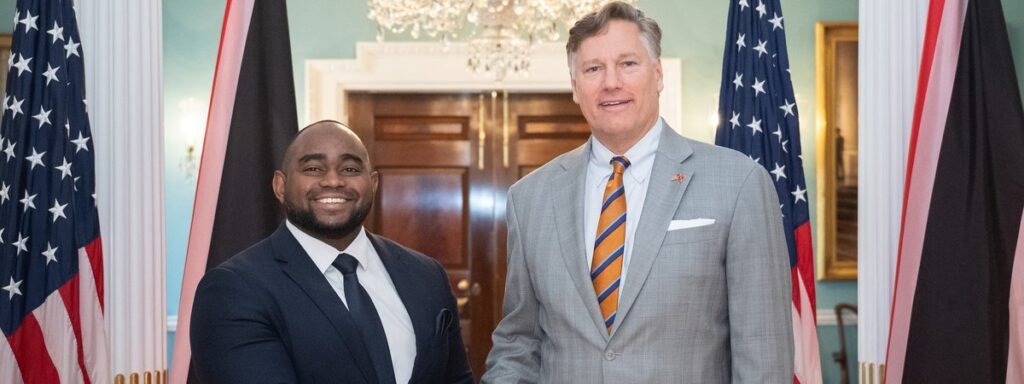
The Persad-Bissessar administration has built a close relationship with Washington. The Ministry of Foreign and CARICOM Affairs said Prime Minister Kamla Persad-Bissessar held talks with the Trump administration at the Shield of the Americas Summit in Miami in March. It said Foreign Minister Sean Sobers then met officials from the State, Energy and War departments, the Office of the US Trade Representative and the National Security Council in Washington from May 13 to 15. According to the ministry, Deputy Secretary of State Christopher Landau told Sobers that relations are at their highest level in decades and thanked the prime minister for her leadership against transnational crime.
Political commentator and pollster Dr Mwale Henry said before the results that a change in congressional control could trigger investigations by the House Foreign Affairs Committee into US policy in the Caribbean, interventions in Venezuela and possible human rights breaches. He said that could raise questions about Trinidad and Tobago’s involvement. Henry also questioned whether the Government had sufficiently considered a change in congressional control. He cautioned, however, that a Democratic win would not necessarily bring major changes to existing security arrangements or US foreign policy, with Congress more likely to review funding and methods. He said there would be some disruption and that the real question was how much.
Former Member of Parliament Rodney Charles argued that the Government had tied its foreign policy to President Donald Trump personally rather than to the United States as a whole, saying it was tethered “absolutely, totally and seemingly irrevocably” to his leadership. Charles pointed to the Government’s support for US security operations in the Caribbean and its recent vote alongside Washington against a United Nations resolution calling for an end to the American embargo on Cuba. He said a Democratic Congress could examine regional operations, including the US military action that captured then-Venezuelan president Nicolás Maduro in January, and communications between Trinidad and Tobago and US officials. These are political assessments and not findings of wrongdoing. A Government response was not part of the material reviewed.
Charles advised planning for different scenarios with institutions such as the UWI Institute of International Relations, a quieter diplomatic approach and stronger economic ties with other partners. Political analyst Dr Shane Mohammed urged against premature changes. He said Congress approves budgets and exercises oversight, but the president keeps considerable authority over foreign policy and bilateral agreements, and some security and defence funding would need approvals that could change. He said awareness did not mean switching sides.
Energy is the other pressure point. Henry warned that changes in Washington’s approach to Venezuela could add uncertainty to Trinidad and Tobago’s ongoing negotiations for access to Venezuelan natural gas. Both Henry and Charles also raised concern about the pending Senate confirmation of Trinidad and Tobago-born Jennifer Johnson-Carroll as the next US ambassador to the country, suggesting a Democratic Senate could affect or delay it. The current Senate remains in place until the new Congress is sworn in.
Congress’s tools are real but limited. The House can open investigations and hold hearings, Congress controls appropriations and the Senate confirms nominees, but the president can veto legislation, and removing a president through impeachment requires a two-thirds Senate vote. Several matters will not be clear until January: who chairs the foreign affairs committees, whether hearings are called on Caribbean military operations and Venezuela policy, and how the administration responds.
The Trinidad Guardian’s interviews with Dr Mwale Henry, Rodney Charles and Dr Shane Mohammed (republished by the Trinidad Tribune), the Ministry of Foreign and CARICOM Affairs’ May 15, 2026 release, and Associated Press call counts as reported by ABC News, WHEC and HNGN