The 40th Divali Nagar opened amid funding questions. Its programme celebrates Hindu heritage and national identity in Trinidad.
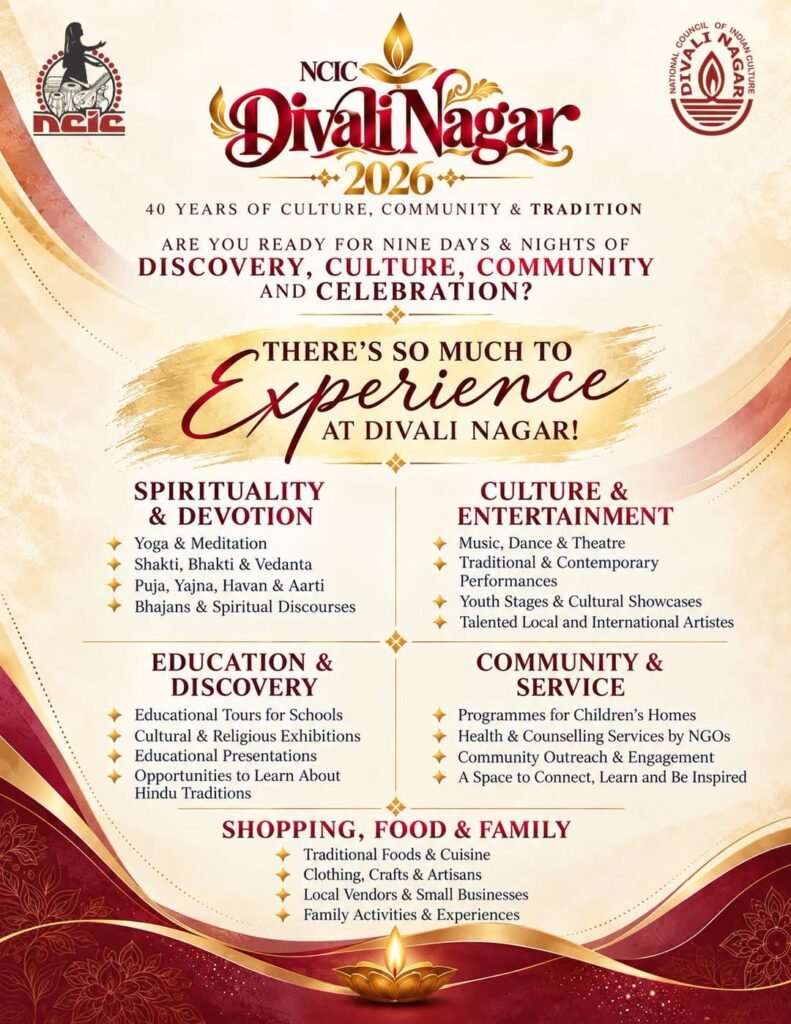
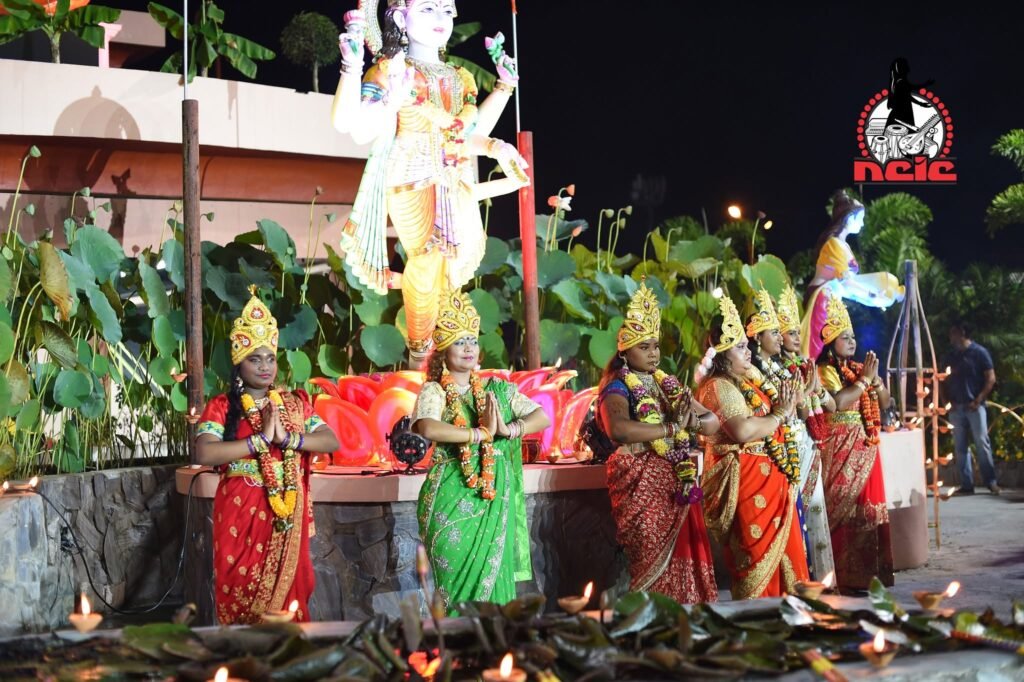
The 40th edition of Divali Nagar opened on October 30 at the National Council of Indian Culture’s (NCIC) grounds in Chaguanas, marking four decades of promoting Hindu heritage, religious traditions and Indo-Trinidadian culture. The nine-day celebration, running until November 7, brings together religious presentations, traditional performances, food, cultural exhibitions and commercial activities, continuing a festival that has become an established feature of Trinidad and Tobago’s cultural calendar.
This year’s celebration carries the theme “Viveka: Discerning Truth in the Age of AI”, connecting traditional Hindu philosophical thought with contemporary questions surrounding technology and artificial intelligence. The concept of Viveka refers to discernment and the ability to distinguish truth from falsehood. Its inclusion reflects an effort to present cultural and spiritual teachings within the context of a rapidly changing technological society. Through its programme, the Nagar provides opportunities for younger generations to engage with cultural traditions while allowing the wider public to experience aspects of Hindu religious and artistic expression.
The anniversary celebrations, however, have opened against a backdrop of controversy surrounding the festival’s financing and the relationship between the NCIC and the Government. Prime Minister Kamla Persad-Bissessar confirmed that the organisation would receive $500,000 in Government funding through the Ministry of Culture. She questioned the NCIC’s disclosure practices, accusing the organisation of failing to inform the Government that it had applied for public funding while also seeking financial support from several state enterprises. The dispute followed the withdrawal of sponsorship from a number of state-linked companies, while Blue Waters increased its financial commitment and became an official Diamond sponsor for the anniversary celebrations.
Despite the controversy, vendors participating in the opening night expressed optimism about the festival’s ability to attract visitors throughout its run. The Trinidad Guardian reported that the initial turnout on October 30 was relatively modest, with several booths still being prepared and limited activity across the grounds during the early evening. Some vendors attributed the quieter opening to weather conditions and the fact that the first night is not traditionally the busiest. Others anticipated increased attendance as the celebrations progressed.
For long-standing participants, the Nagar represents more than a commercial exhibition. Vendor Denise Chinpire O’Reilly, who has participated for more than a decade, described its importance to the Hindu community, comparing its significance to Christmas within the Christian community. Other participants pointed to opportunities created by smaller and more affordable booth spaces, which have allowed newer businesses to gain exposure. The festival therefore continues to serve both as a cultural gathering and a platform for small and medium-sized enterprises.
The wider Divali celebrations have also extended into the country’s parliamentary space. A separate event held at the Red House following a sitting of the House of Representatives featured Government and Opposition representatives, children, diya lighting, a Ramleela presentation and a procession of murtis along Abercrombie Street. Prime Minister Persad-Bissessar described the occasion as a significant moment marking 60 years since Divali was declared a public holiday. Opposition Leader Penelope Beckles-Robinson used the occasion to appeal for national unity, saying the country’s diversity should be recognised as a strength.
Questions have subsequently emerged about who organised and financed the parliamentary celebration, with different accounts provided by parliamentary officials. House Speaker Jagdeo Singh and Deputy Speaker Dr Aiy na Ali initially identified parliamentary staff as organisers, while Parliament’s Director of Corporate Communications and Productions, Colleen Holder, said the event was organised externally and facilitated by Parliament. The question of its funding remained unanswered in the Guardian’s November 1 report.
As Divali approaches, the 40th Nagar provides another opportunity to recognise the contribution of Hindu traditions to Trinidad and Tobago’s national identity. Its religious presentations, cultural performances, cuisine and community participation reflect a heritage that has developed across generations and become part of the country’s wider multicultural experience. While questions surrounding sponsorship and organisational accountability remain in the public discussion, the continuation of the celebrations places the focus on the preservation, presentation and appreciation of the country’s cultural traditions.