
Trump says Washington may target Iran’s Pickaxe Mountain facility as officials reportedly prepare strike options involving America’s largest non-nuclear bomb.
U.S. President Donald Trump has said the United States may strike Iran’s heavily fortified Pickaxe Mountain site, as reports emerge that American military planners have prepared additional options that could include using the GBU-43/B Massive Ordnance Air Blast bomb, known as the “mother of all bombs.” Trump’s remarks, made in interviews and public comments on Thursday and Friday, October 15 and 16, came as Washington continued to consider its next steps in the conflict with Tehran.
Reuters reported that Trump told Newsmax the United States might have to target Pickaxe Mountain, a deeply buried facility associated with Iran’s nuclear programme. He said Washington wanted to prevent Iran from acquiring a nuclear weapon and suggested the site could be struck quickly. Trump did not confirm that he had authorized the use of the MOAB. He reiterated that he would not use nuclear weapons against Iran and said he was not considering sending U.S. ground troops into the country.
CNN, citing multiple U.S. officials familiar with the planning, reported that proposed strike packages could include attacks on Iranian energy infrastructure and nuclear facilities. CBS News separately reported that the White House and Pentagon had prepared plans involving the MOAB if Trump ordered further military action. The reports describe contingency planning rather than confirmation that a strike has been ordered.
The MOAB is the largest non-nuclear bomb in the U.S. arsenal. It was used in combat for the first time in 2017 against an Islamic State cave complex in Afghanistan. Although its enormous blast can devastate large areas above ground, its effectiveness against deeply buried installations is disputed. CNN’s reporting highlighted questions about whether the weapon could damage facilities protected by substantial layers of rock. Military analysts have also questioned whether using it would achieve a decisive strategic result.
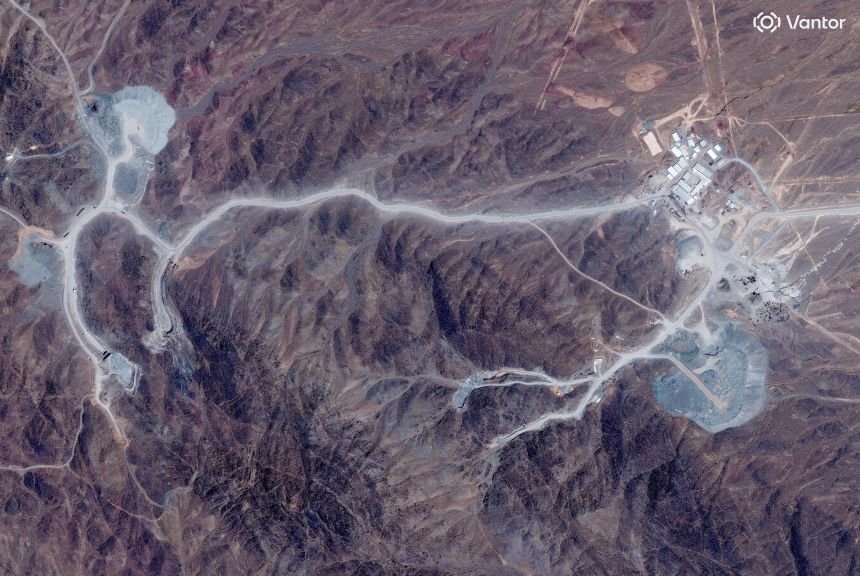
Pickaxe Mountain has drawn attention because of assessments that Iran may have nuclear-related infrastructure deep underground at the site. However, the precise nature of the facility and what it contains have not been independently established in the reporting cited here. The challenges of striking deeply buried targets remain central to questions about the effectiveness of any proposed operation.
The timing of possible further attacks also remains uncertain. CNN reported that military planners had considered options that could be carried out before or after the November 3 U.S. midterm elections. The reporting described uncertainty over whether the administration would maintain its earlier public position against launching additional strikes before the vote. The White House has declined to discuss specific military plans, saying it does not comment on sensitive options that may or may not exist.
The conflict began on February 28 with U.S. and Israeli strikes on Iran. Tensions have also affected the Strait of Hormuz, a key route for global energy shipments. Trump has said negotiations with Tehran are continuing, while maintaining that Iran must not obtain a nuclear weapon. Iran has said it will continue fighting until its demands are met. Whether Washington will resume major combat operations, and which weapons it might use, remains unclear.
U.S. President Donald Trump has said the United States may strike Iran’s heavily fortified Pickaxe Mountain site, as reports emerge that American military planners have prepared additional options that could include using the GBU-43/B Massive Ordnance Air Blast bomb, known as the “mother of all bombs.” Trump’s remarks, made in interviews and public comments on Thursday and Friday, October 15 and 16, came as Washington continued to consider its next steps in the conflict with Tehran.
Reuters reported that Trump told Newsmax the United States might have to target Pickaxe Mountain, a deeply buried facility associated with Iran’s nuclear programme. He said Washington wanted to prevent Iran from acquiring a nuclear weapon and suggested the site could be struck quickly. Trump did not confirm that he had authorized the use of the MOAB. He reiterated that he would not use nuclear weapons against Iran and said he was not considering sending U.S. ground troops into the country.
CNN, citing multiple U.S. officials familiar with the planning, reported that proposed strike packages could include attacks on Iranian energy infrastructure and nuclear facilities. CBS News separately reported that the White House and Pentagon had prepared plans involving the MOAB if Trump ordered further military action. The reports describe contingency planning rather than confirmation that a strike has been ordered.
The MOAB is the largest non-nuclear bomb in the U.S. arsenal. It was used in combat for the first time in 2017 against an Islamic State cave complex in Afghanistan. Although its enormous blast can devastate large areas above ground, its effectiveness against deeply buried installations is disputed. CNN’s reporting highlighted questions about whether the weapon could damage facilities protected by substantial layers of rock. Military analysts have also questioned whether using it would achieve a decisive strategic result.
Pickaxe Mountain has drawn attention because of assessments that Iran may have nuclear-related infrastructure deep underground at the site. However, the precise nature of the facility and what it contains have not been independently established in the reporting cited here. The challenges of striking deeply buried targets remain central to questions about the effectiveness of any proposed operation.
The timing of possible further attacks also remains uncertain. CNN reported that military planners had considered options that could be carried out before or after the November 3 U.S. midterm elections. The reporting described uncertainty over whether the administration would maintain its earlier public position against launching additional strikes before the vote. The White House has declined to discuss specific military plans, saying it does not comment on sensitive options that may or may not exist.
The conflict began on February 28 with U.S. and Israeli strikes on Iran. Tensions have also affected the Strait of Hormuz, a key route for global energy shipments. Trump has said negotiations with Tehran are continuing, while maintaining that Iran must not obtain a nuclear weapon. Iran has said it will continue fighting until its demands are met. Whether Washington will resume major combat operations, and which weapons it might use, remains unclear.
This report draws on reporting by Reuters, CNN and CBS News, including reports published October 15–16, 2026.