
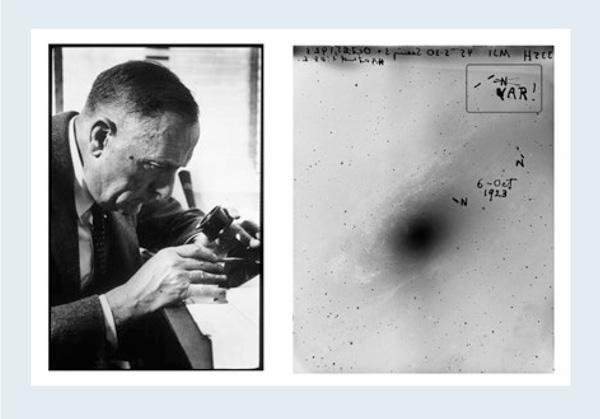
On November 23, 1924, news of American astronomer Edwin Hubble’s discovery that the Andromeda Nebula was actually a separate galaxy beyond the Milky Way was published in The New York Times. Using observations from the Mount Wilson Observatory in California, Hubble identified individual stars in Andromeda, including Cepheid variable stars, which allowed astronomers to estimate its distance. The findings challenged the belief that the Milky Way represented the entire universe.
The discovery fundamentally changed humanity’s understanding of the cosmos by providing strong evidence that the universe contained other galaxies far beyond our own. Andromeda, now recognised as the nearest major galaxy to the Milky Way, became a key subject in the development of modern astronomy. Hubble’s work helped establish the foundation for subsequent research into the size, structure and expansion of the universe.